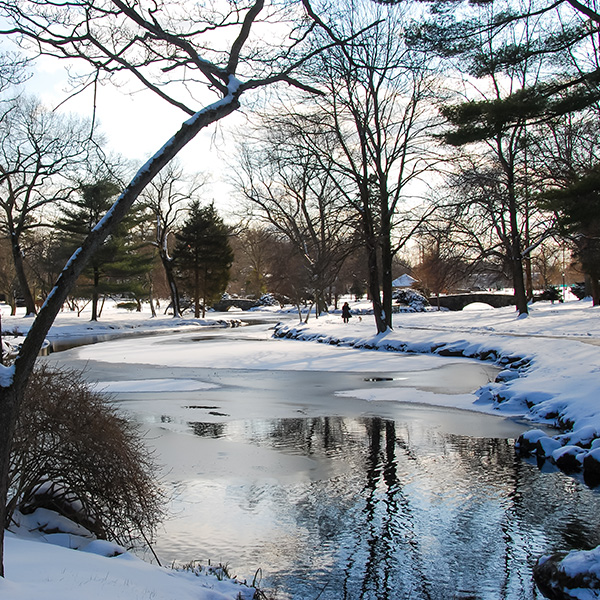
A frozen pond in winter is inevitable in colder climates. The ice is beautiful and creates plenty of opportunities for outdoor recreation. But what is happening under the surface? And how long does it take for a lake or pond to freeze? The process doesn’t happen overnight—indeed, it takes a stretch of cold days to freeze a pond, and even longer for a lake.
How Do Lakes Freeze?
During warm months, lakes and deeper ponds are thermally stratified. Warmer, lighter water stays near the surface, while colder, denser water settles near the bottom. Wind mixes the surface layer, but the deeper water remains relatively undisturbed. A middle zone called the thermocline separates these layers.
As air temperatures cool in autumn, surface water loses heat and becomes denser. Water reaches its maximum density at about 39°F (4°C). Once the surface water cools to this temperature, it sinks, displacing slightly warmer water below. This mixing process—known as fall turnover—continues until most of the water column is close to 39°F.
After turnover is complete, further cooling causes surface water to drop below 39°F. At that point, water becomes less dense, so it stays on top rather than sinking. When surface temperatures reach 32°F (0°C), ice begins to form. Because ice is less dense than liquid water, it floats, creating an insulating layer that slows further heat loss from below.
How Long Does It Take for a Pond to Freeze?
Ice formation begins when surface water reaches 32°F, but freezing an entire body of water is much harder.
- Shallow ponds (generally less than 6 feet deep) can freeze solid during prolonged periods of very cold weather.
- Deeper ponds and lakes almost never freeze solid. Even in midwinter, water beneath the ice usually remains near 39°F.
- Continuous air temperatures below freezing are required to thicken ice, but wind, snow cover, and water movement all affect how fast this happens.
Snow acts as insulation, slowing ice growth, while clear, calm, and cold conditions promote faster freezing. While ice may appear solid, thickness can vary significantly across a pond.
Safety note: Ice should be at least 4 inches thick for walking and thicker for heavier loads. Ice near inlets, aerators, or moving water is often dangerously thin.
Enjoy and Protect Your Frozen Pond
From backyard ponds to sprawling inland lakes, frozen water forms through a fascinating blend of physics, temperature patterns, and environmental conditions. Understanding how these systems work helps you better care for your pond through winter—and gives you a new appreciation for nature’s winter engineering.
If you’d like help protecting your pond through the cold months, The Pond Guy has everything you need to keep your pond thriving all winter long.
Read more articles
Ice Safety | The Pond Guy
Do Aeration Systems Work on Frozen Ponds? | The Pond Guy
Last Updated: January 22, 2026