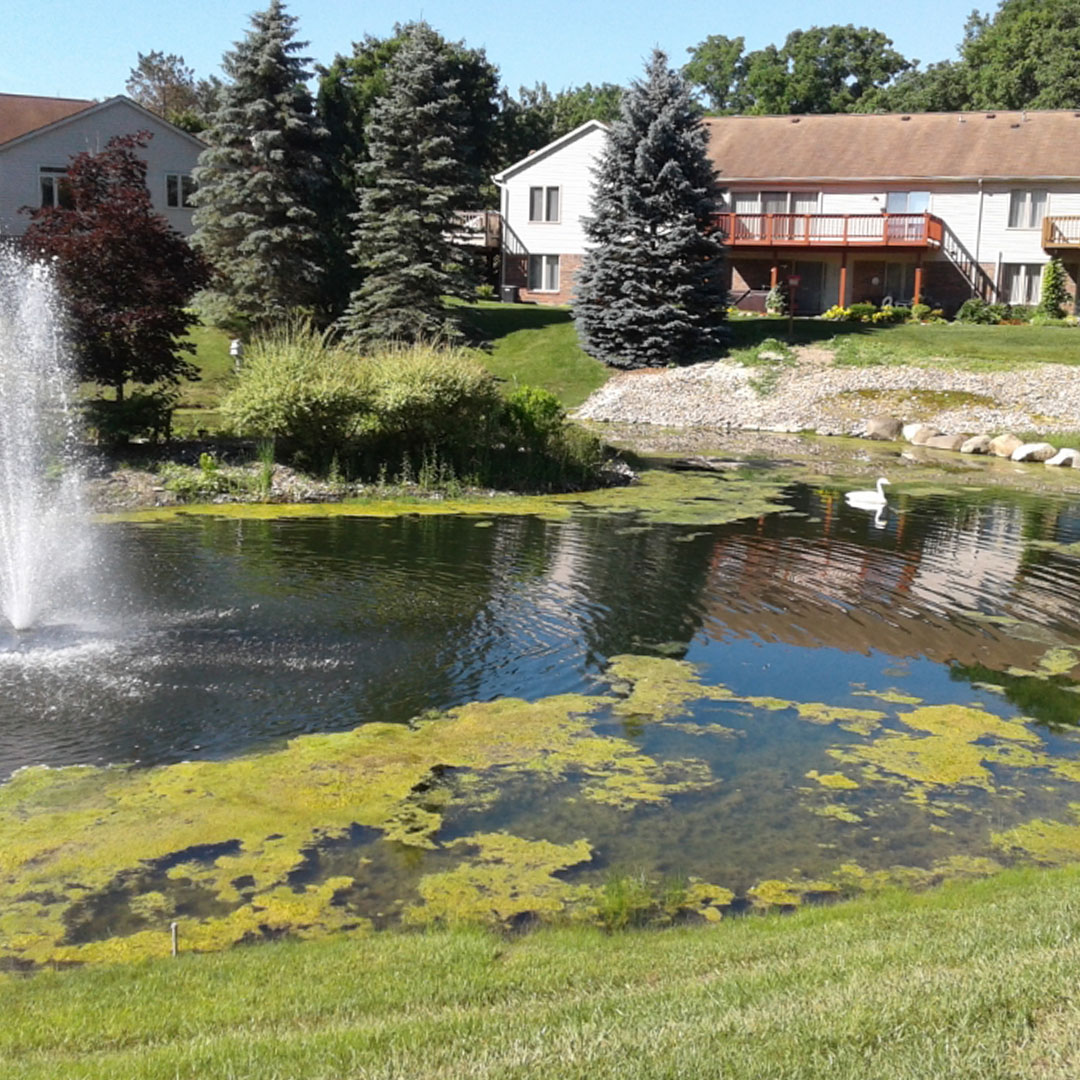
Whether you manage a large farm pond or live near agricultural land, fertilizer runoff is an insidious problem that should be prevented. Left unchecked, it can turn a thriving waterbody into a murky, algae-choked mess. Why does runoff water harm ponds, and how can you stop it?
Learn how fertilizer runoff can affect an aquatic ecosystem, what causes it, and how to reduce pollution in your water using best practices and trusted pond care solutions.
What Is Fertilizer Runoff?
Fertilizer runoff occurs when rainfall or irrigation washes excess nutrients from lawns, gardens, and fields into nearby bodies of water. This surface runoff is especially common in areas with sloped terrain, compacted soil, or overfertilized landscapes. This stormwater runoff flows into ditches, streams, and eventually into your pond or lake, carrying nutrients like nitrogen and phosphorus.
What Are the Effects of Fertilizer Input Into Lakes?
Excess nutrients entering a pond or lake can spark explosive algae growth and cause eutrophication. You’ll know it’s happening when the water turns green or cloudy, aquatic plants overgrow, and oxygen levels drop. Ultimately, this can kill fish, disrupt the food web, and destroy the natural balance of your aquatic ecosystem.
How Does Nitrogen in Fertilizer Runoff Affect Aquatic Ecosystems?
Nitrogen fuels algae blooms, and bacteria use oxygen to break down dead algal cells as they decompose. That creates dead zones—low-oxygen areas where fish, amphibians, and beneficial invertebrates struggle to survive. According to North Dakota State University Extension, high nitrate levels are one of the leading causes of impaired water quality in agricultural regions. Fertilizer runoff can also affect your health if you use lake water for irrigation, swimming, or fishing.
How to Reduce Fertilizer Runoff
If you’re wondering how to reduce fertilizer runoff, the good news is you’ve got options at the source and in your pond.
1. Reduce Fertilizer Use Upstream
- Follow soil test recommendations to avoid over-application.
- Use slow-release fertilizers when possible.
- Avoid fertilizing before heavy rain.
- Maintain vegetative buffers between your lawn or field and the pond.
2. Break the Nutrient Cycle With EcoBoost PRx
Even if fertilizer runoff has already occurred, you can still restore balance to your lake using a product like Airmax EcoBoost PRx. EcoBoost PRx binds excess nutrients like phosphorus to reduce water clarity issues and support beneficial bacteria. It also enhances the results of your beneficial bacteria treatments.
3. Understand the Nitrogen Cycle
Knowledge is power when it comes to managing runoff. Our article on the nitrogen cycle outlines how nutrients move through the pond system.
Controlling Surface Runoff for Lasting Clarity
Fertilizer runoff is a silent intruder—but you don’t have to let it take over your waterbody. By controlling pollution in water at the source and using pond-safe solutions like EcoBoost PRx, you can protect your pond from harmful blooms and enjoy a clean, balanced aquatic environment all season long.
Need help developing a nutrient management plan for your pond? Contact us at 866-POND-HELP to connect with an experienced Pond Coach.
Read more about fertilizer in the following related guides:
How Phosphates Impact Ponds & Lakes
Learn How to Apply EcoBoost PRx Effectively
Guide to Lawn Fertilization Near Ponds
Last Updated: September 4, 2025