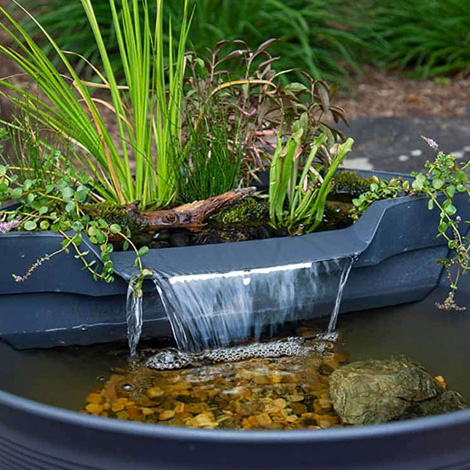
Backyard mini ponds are a wonderful option for those who are short on space or looking for less maintenance than a full-sized pond. These compact water features bring a splash of nature and tranquility to any space.
A mini pond is a small, self-contained water feature. A traditional pond requires you to have a sizeable amount of space and to dig into the ground. Most mini ponds, on the other hand, use a mini pond container, such as a ceramic pot or waterproof planter. Mini ponds are perfect for renters, those in urban environments, and first-time pond builders.
Here’s how to get started, plus creative mini pond ideas to inspire your design.
Types of Backyard Mini Ponds
Before you build a mini pond, consider the design, the space, and the budget. A few common types of mini ponds include:
- Garden mini pond: If you have an existing garden, nestle your pond amongst the flowers.
- Patio or balcony pond: A raised container mini pond works beautifully in tight spaces.
- Tiered mini ponds: Use multiple containers at different heights or a single tiered container. Include a pump to create a small fountain.
- Natural-style ponds: Incorporate rocks and native plants to attract wildlife.
How to Build a Mini Pond
A DIY mini pond is much less involved than a larger water feature. The simplest option is to buy a mini pond kit and follow the instructions.
If you’d prefer to construct the pond without a kit, you’ll need a watertight container and substrate. The container should be at least 12 inches deep for plant life. Place it in an area that receives a mix of shade and sunlight. You may also want to incorporate a water filter and an aeration system to improve water quality and reduce the mosquito population.
Can You Have a Mini Fish Pond?
Fish are usually not recommended for very small ponds. The size makes it difficult to maintain stable temperatures and oxygen levels.
Mini ponds are, however, highly wildlife-friendly. With a bit of work, you can create a mini wildlife pond that attracts passing birds, insects, and even frogs. You’ll need to recreate their natural environment as best as possible using native plants and rocks.
Choosing Mini Pond Plants
The right mini pond plants keep water clear and support visiting wildlife. Certain combinations of plants will do the work of a water filter, creating an even more serene and natural environment.
Try to choose at least one plant that floats, one plant that sits near the edge of the pond, and one that is completely submerged. You may need to gently place rocks or twine around roots or stems to keep the plants in place.
Mini Pond Maintenance Tips
Mini ponds are low-maintenance, but they do need some care.
- Keep an eye on water levels and add water. If using tap water, let it sit in a protected container for a day or two before adding it to the pond.
- Pick out any fallen leaves and debris.
- Trim any surrounding plants.
- Move the pond indoors in the winter if you’re in a colder climate.
Parting Thoughts
With a simple container and a bit of creativity, you can build a mini pond that adds sound, movement, and life to your outdoor space. These small water features can make a big impact on your outdoor space.
When you’re ready to assemble your mini pond, The Pond Guy has everything you need to bring your vision to life.
Read more articles
- Patio Pond Ideas | The Pond Guy
- Low Maintenance Water Features | The Pond Guy
- Raised Garden Pond Ideas | The Pond Guy
Last Updated: January 15, 2026