
Asked By: Margie of Clinton, ME
A: Creating a mini-ecosystem of your pond with a Jar Test will help you diagnose your pond problem. If you have green, tea-colored, or murky water, this simple pond water test will help you determine what is causing the clarity issue.
How to Jar Test Pond Water
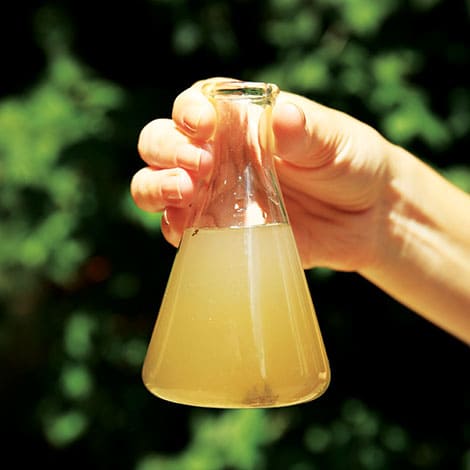
Take a clear glass jar, dunk it in your pond, fill it with pond water, and let it sit in a dark place for 24 hours. Overnight, the jar stratifies and becomes a miniature version of your pond.
Interpreting Jar Test Results
Green Water
If the water in your jar is green or contains suspended green particles, you probably have algae. The source of nuisance algae blooms is often planktonic algae—floating, microscopic plants that color pond water green, blue-green, brown, or variations in between.
To clear things up, learn how to get rid of algae in water gardens and which algaecide is best for your large pond or lake from our experts.
Tea-Colored Water
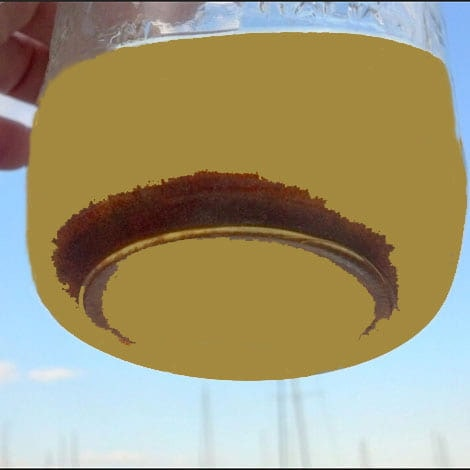
Beige or tea-colored water means you have leaf tea brewing in your pond. As organic debris decomposes, tannins and other byproducts steep and discolor the water.
Water Gardens & Small Ponds (Measured in Gallons): Your first remedy is to add a bag of Activated Carbon to the water. It will clear up the dissolved materials that are causing the problem. While the carbon is working, remove floating and decaying material with a skimmer net or use the ClearVac Pond Vacuum. Keep your pond clean by skimming it regularly and covering it with pond netting during the fall months.
Lakes & Large Ponds (Measured in Acres): Start by removing large debris from your pond with sturdy lake rakes for both floating and submerged use. Check the bottom of your pond thoroughly for sunken branches, which you may need to remove by hand. Skim the water with the Jenlis Swifter Sifter to remove fine debris like leaves and needles. Once all tannin-rich debris is removed, the water should clear up naturally over time.
Clear Water With Sediment
Does your jar have clear water with a layer of sediment on the bottom? If so, you have an abundance of organics in the pond. When animals enter your pond or fish play and forage for snacks, they stir up debris and cloud the water.
Water Gardens & Small Fish Ponds (Measured in Gallons): Here is an easy four-step water treatment plan to get you started:
- Remove large debris.
- Perform a partial water change of approximately 25-30% of the water volume.
- Add Water Conditioner.
- Double down on the Beneficial Bacteria.
Lakes & Large Ponds (Measured in Acres):
Remove debris using the method for clearing tea-colored water, then address organic and inorganic debris suspended in your water column. Airmax ClearPAC Plus pond maintenance kit contains essential supplies to help clarify your lake in combination with diffused aeration.
EcoBoost PRx captures free-floating phosphates and other contaminants, sinking them to the pond bottom. Combined with water-clarifying and muck-eating beneficial bacteria, and a dose of protective pond dye, your water will return to clean and clear in no time.
Pond Water Testing Advice
A jar test can reveal a lot about the water in your pond. If you need assistance determining what your jar is telling you, call us at 866-POND-HELP, email us your Jar Test photo at WeedID@ThePondGuy.com, or use our contact form.
Check out these related water quality and testing articles for water gardens, ponds, and lakes:
- How to Clear Brown Pond Water
- How to Fix Foam in Pond Water
- How to Lower pH in a Pond
- Muck Control
- Turbidity in a Pond Explained
Last Updated: December 8, 2025