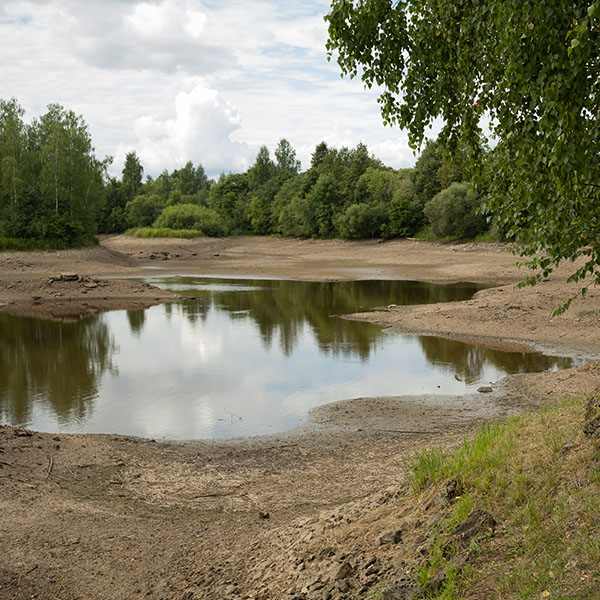
Ponds are dynamic ecosystems, but what happens to a pond during a drought can challenge both the plants and animals that live there. When your pond experiences a period of low rainfall and high evaporation, the effects are more than just a lower water level.
How Droughts Affect Ponds
A reduced water volume means that fish and aquatic life are confined to smaller areas, contributing to higher levels of competition, stress, and disease transmission. A smaller pond volume means less dilution of waste metabolites, such as ammonia, nitrates, and CO₂, resulting in an increased concentration of these toxic compounds, which further stresses pond inhabitants.
Additionally, there is less dissolved oxygen in warm, shallow water. Shallow bodies of water heat more rapidly during the daytime, and warm water holds less oxygen than cold water. While the pond may cool overnight, plants and algae can exacerbate the issue by consuming oxygen at night through respiration.
When water levels drop, previously submerged areas or shallow zones become exposed to the air. This allows for more sunlight and shallow margins, which foster the rapid growth of aquatic plants and algae. Exposed soil banks also erode, adding suspended particles to the pond water and reducing clarity.
A pond during drought becomes a much more fragile ecosystem. In small ponds and water gardens, these negative impacts are more pronounced. Recognizing the signs early and acting quickly can make the difference in whether your pond thrives or suffers.
Solutions for Droughts in Ponds
Given the stressors above, what practical steps can pond owners take? Here are actions and strategies — from design to active management — to help a pond survive and recover from drought conditions.
Preventive Solutions
- Plan for depth: Allow for at least two feet of water loss from evaporation and seepage during a drought, and plan a minimum pond depth of three feet during drought (five feet under standard conditions).
- Line your pond: Use appropriate soils or liners to limit excessive seepage, which can become dominant when the water table drops.
- Install aeration: Deploy a diffused aerator or aerating fountain to maintain sufficient oxygen levels during droughts.
- Plant marginals: Plant drought-tolerant pond shoreline plants that stabilize banks, reduce edge erosion, and cope with fluctuating water levels.
Active Management During Drought
- Monitor water level and quality: daily pond water testing can help you spot warning signs of oxygen depletion early, like fish gulping and mass algae die-offs.
- Add aeration: Consider supplemental aeration systems to maintain oxygen levels when volume drops.
- Reduce fish density and feeding: As water volume shrinks, feeding and fish waste must be reduced to avoid oxygen demand overload and nutrient spikes.
- Avoid using herbicides or algicides during a drought: If you apply aquatic herbicides during a drought, the decaying vegetation may further deplete oxygen and kill fish.
- Shoreline protection: Exposed banks during drought are vulnerable to erosion and agitation by wind waves, but stabilizing edge vegetation helps.
Recovery Post-Drought
After rainfall returns, bring the pond back to “normal” slowly to prevent shock. Refill water incrementally while adding water clarifier and beneficial bacteria to maintain quality. Restore balanced fish stocking and feeding gradually, and continue regular water testing to ensure balanced parameters.
Common Drought-Tolerant Pond Plants
While drought is a challenge, the right vegetation can help stabilize the pond margins, reduce erosion, and inhibit evaporation in small ponds and water gardens.
Marginal plants that can survive the edge drying out temporarily or tolerate shallow water rather than deep water are more forgiving of fluctuating water levels and arid conditions. These include:
- Arrowhead plants have strong tubers, large leaves, and can handle shallower and fluctuating levels.
- Blue Flag Iris is a marginal plant with sturdy, stabilizing root systems.
Floating pond plants help block evaporation, slowing the rate at which a drought impacts your pond. Protective floating plants include:
- Water lettuce features large, floating leaves that shade the surface of your pond, slowing evaporation.
- Water lily and lotus plants also provide leaf shade, but these are not true floating plants and require water 12-24 inches deep. This makes them less ideal for ponds prone to severe drought (water loss of more than two feet).
Protecting Your Pond From Harsh Weather
With proactive planning and informed vegetation choices, you can effectively manage a drought-prone pond and mitigate the risks of fish kills, poor water quality, and ecosystem collapse. Contact us at 866-POND-HELP for advice to help you and your pond weather any conditions.
Explore these related articles to learn more:
How to Build a Stormwater Retention Pond
Pond Liner: The Essential Guide
Spring-Fed Ponds - Building a Pond
Summary & Key Takeaways
- Drought ponds face special stresses: low water volume, warm temperatures, reduced oxygen, increased plant/algal growth, shoreline exposure, and fish crowding.
- Understanding what happens to a pond during a drought enables you to anticipate and act: monitor water quality, protect oxygen, reduce crowding, and manage plants.
- The choice of drought-tolerant pond plants and common pond plants that can survive drought is important: emergent marginals with stabilizing roots, and floating plants that slow evaporation.
- Solutions for droughts in ponds span design choices (watershed size, depth, soils), daily management (aeration, monitoring, fish/feeding adjustments), and vegetation strategy (planting drought-resilient margins).
Last Updated: November 14, 2025