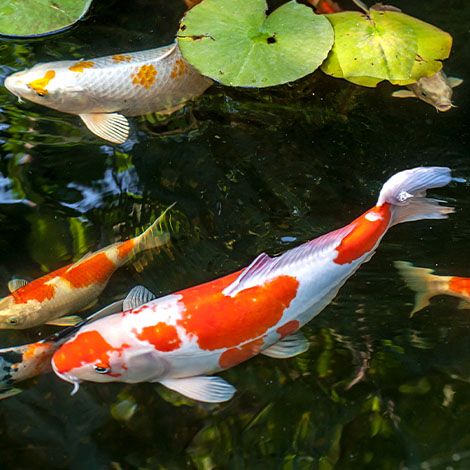
If you’re considering taking the plunge and adding fish to your pond, you may be wondering– How long do koi live? Or what is the average life expectancy of a goldfish?
Goldfish, koi, and others can make for surprisingly long-term backyard companions under the right circumstances. Read on to learn how to help your backyard fish live long and healthy lives.
Koi Fish Lifespan: How Long Can Koi Fish Live?
The average koi lifespan is around 40 years. That said, koi fish living in ideal conditions can live over 100 years old. Koi fish's life expectancy depends on their environment and whether predators are nearby.
Hanako, a 226-year-old scarlet koi carp from Japan, was the oldest koi fish recorded. A Nagoya Women’s College professor verified Hanako’s age by counting the rings on two extracted scales. The koi was born in the 1700s and lived until 1977.
How Long Do Goldfish Live?
Goldfish have a shorter lifespan than koi. The average life expectancy of goldfish ranges from 10 to 15 years, but some live much longer. The oldest recorded goldfish was 43 years old.
Goldfish in ponds tend to live longer than goldfish in aquariums. A goldfish can easily live up to 30 years with the right environment.
What Impacts the Lifespan of Fish in a Pond?
Koi, goldfish, and other backyard fish thrive in clean water. They need food, shelter, shade, and comfortable temperatures. Koi fish, in particular, seem to live longer in colder climates. This may be because koi enter a state of dormancy in colder temperatures. By slowing their metabolism and activity, they reduce stress on their body, resulting in a longer life expectancy.
Species matters, too. Fantail goldfish, for example, tend to have a shorter lifespan than common goldfish, due to anatomical issues.
Tips for Extending the Lifespan of Your Fish
There are some elements within your control regarding goldfish or koi lifespan.
- Clean water. Water quality is a massive part of creating a hospitable environment for your fish. Ensure you have proper aeration and filtration and perform any necessary maintenance at regular intervals. You may also want to use a test kit to check pH levels, ammonia, nitrates, and nitrites.
- Provide shade and shelter. Fish need places to hide, explore, and rest. Aquatic plants, rocks, moss, and other natural elements can enhance your landscape while providing much-needed shade and shelter for backyard fish.
- Food. Of course, fish need to eat. Feed your koi or goldfish high-quality fish food. If your pond contains both koi and goldfish, feed them separately with the appropriate food for each type of fish. If you are in a cold climate, refrain from feeding your fish when they are dormant in the winter.
- Protect from predators. Keeping fish safe is no easy feat. They are natural prey for cats, possums, birds, raccoons, and other critters. Your best bet is to minimize trash or obvious food sources near your pond and ensure plenty of underwater places for your fish to hide.
- Find a good source. Goldfish and koi lifespans aren’t just influenced by where they wind up. Where they come from matters, too. Try to purchase your fish from high-quality sources. The Pond Guy has a wide selection of high-quality domestic and Japanese koi.
Final Thoughts
Koi and goldfish can make for a vibrant addition to any pond. And, with the proper care, they can serve as a backyard companion for many years. If you have questions about adding fish to your backyard pond, the experts at The Pond Guy are ready to assist.
Read more articles
Last Updated: July 15, 2025