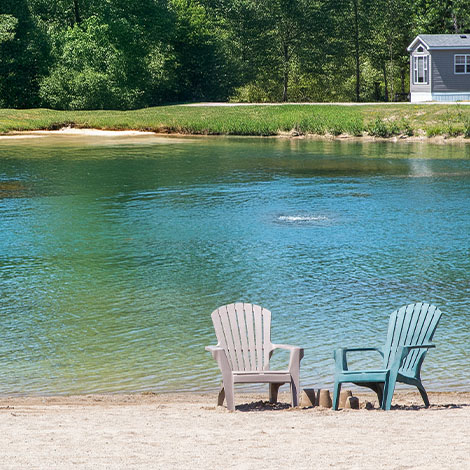
Drought has become a recurring fact of life for pond and lake owners. As summer 2026, roughly half of the United States was in drought, with conditions worsening across the globe. When rain stops and evaporative demand climbs, your pond is often the first in the landscape to show it: the shoreline creeps outward, the dock ladder gets taller, and fish start crowding into the deepest hole they can find.
A shrinking pond is a manageable problem when you act before conditions get critical. Here is how to slow water loss, decide whether refilling is safe (or legal), and keep your fish safe until the rain returns.
What Happens to a Pond During Drought
Losing water is only the visible symptom. The real risk is how a smaller water volume impacts temperature, oxygen, and dissolved pollutants.
A smaller pond volume means less dilution of waste metabolites such as ammonia, nitrates, and carbon dioxide. Those compounds concentrate as the water disappears, stressing everything that lives there. The same goes for phosphates and suspended organics that stay behind when water evaporates. Airmax PondClear with EcoBoost PRx helps digest organics and bind up Free Reactive Phosphorous to reduce the nutrient load in your pond.
Additionally, shallow ponds have less resistance to temperature extremes, and warm water simply cannot hold as much dissolved oxygen as cool water. This is why diffused aeration is vital to fish survival during extreme weather events. Fish and other aquatic life become stressed, and a fish kill can occur when dissolved oxygen drops below about three parts per million. Warmwater species such as bass, bluegill, and catfish generally need around 5 ppm to stay healthy.
When levels drop, previously submerged zones become shallow, sunlit shelves, which foster rapid growth of aquatic plants and algae. Then, when that growth dies back, decomposition consumes still more oxygen. Fish kills from low oxygen are most common during hot, dry spells when algae grow and then die quickly. Exposed soil banks erode, adding suspended particles that reduce clarity and settle out as muck.
Slow the Evaporation You Can Control
You cannot change the weather, but you can reduce how much surface area is exposed and how hard the sun works on your water.
- Add shade to the water column. Pond dye is one of the fastest, most cost-effective drought tools available for larger ponds. A quality pond dye like Airmax Pond Dye tints the water and blocks a portion of the sunlight that heats the upper water column and fuels submerged weed growth. Less light penetration means less rooted plant growth in newly shallow zones and a slightly cooler surface layer.
- Rethink decorative fountains during extreme heat. High-spray decorative fountains look beautiful, but they atomize water and expose an enormous amount of surface area to dry air. During an intense drought, a bottom-diffused aeration system delivers oxygen and circulation with far less evaporative loss than a tall display spray. If you rely on a fountain for aeration, consider switching to a lower-profile pattern or running the display during cooler hours.
- Reduce splash and wind exposure. Wind constantly refreshes dry air across the surface and accelerates evaporation. Allowing natural pond plants like cattails to grow on the prevailing-wind shoreline help, and they slow bank erosion at the same time.
Know the Rules Before You Refill
Watering restrictions vary enormously by state, county, and even by individual water supplier, and they change as drought severity escalates through stages. Some jurisdictions explicitly protect water features, while others are far more restrictive.
Call your water supplier before you run a hose. Ask specifically about ponds containing live fish. Many ordinances distinguish between purely decorative water features and those supporting livestock or aquatic life, and a pond with a fish population is often treated as a health-and-welfare use rather than a nonessential one. Get the answer in writing or note the date and the name of the person you spoke with.
Also note that restrictions typically apply to potable, municipal water. Private well water is frequently regulated differently, though not always, as some regions restrict groundwater withdrawal during severe drought as well.
Protect Oxygen Above All Else
When water is scarce, aeration is the single highest-value intervention you can make. A lack of dissolved oxygen is the most common cause of fish kills in ponds.
- Run aeration continuously through the hot stretch. A diffused aeration system circulates and mixes the water, eliminating stratified layers by moving cooler, oxygen-starved bottom water to the surface where it can be infused with oxygen. In a drought-shrunken pond, that bottom layer is often the deepest refuge your fish have, and if it goes anoxic they lose it.
- Watch for the warning signs. Fish gasping at the surface, especially at dawn, is the classic early signal. Dawn is when oxygen is lowest, because plants and algae consume oxygen at night through respiration. Fish crowding at the edges or near inflows is another red flag.
- Have an emergency plan. If oxygen crashes, stop feeding immediately, run every aerator you have, and if permitted, flush the pond with fresh, aerated water from a well or another source. Aiming a pump discharge across the surface to establish circulation can buy critical time.
Adjust Fish and Feeding
As water volume shrinks, feeding and fish waste must be reduced to avoid oxygen demand overload and nutrient spikes. Every pound of feed you add becomes waste that consumes oxygen as it breaks down.
Cut back feeding significantly during a drought, and stop entirely if you see any sign of oxygen stress. Uneaten food only adds organic matter, and its decomposition increases oxygen demand and raises the odds of a fish kill. Fish can survive for long periods on the naturally available food sources in your pond or lake without any supplemental feeding.
If your pond is severely reduced and heavily stocked, consider selectively harvesting to lower the biomass your remaining water has to support. It is a difficult decision, but a controlled reduction beats a total kill.
Avoid Chemical Treatments
Do not apply herbicides or algaecides during a drought. If you treat during drought conditions, the decaying vegetation may further deplete oxygen and kill fish. Most algaecides work very quickly, and when the algae die, they begin decomposing immediately, robbing oxygen from your fish. In a low-volume, warm-water, low-oxygen pond, that combination is often lethal.
Beneficial bacteria, on the other hand, are a good drought companion. The Airmax ClearPAC Plus Pond Maintenance Kit combines pond dye and EcoBoost PRx with aerobic beneficial bacteria that consume the nutrients that fuel algae and muck. They work best in well-oxygenated water, so pair them with your aeration program.
Recovering After the Rain Returns
When rainfall finally comes back, resist the urge to slam everything back to normal. Bring the pond back to normal slowly to prevent shock. Refill incrementally while adding water clarifier and beneficial bacteria to maintain quality. Restore balanced fish stocking and feeding gradually, and continue regular water testing to confirm your parameters have stabilized.
Watch for a turnover event as well. Heavy rain and cooling temperatures on a stratified pond can rapidly mix the layers, depleting oxygen at the surface as it combines with oxygen-starved bottom water. Continuous aeration eliminates the thermocline and helps prevent this.
Building a Drought-Resistant Pond for Next Time
If you are designing or renovating, plan for the drought you have not had yet. Allow for at least two feet of water loss from evaporation and seepage during a drought, which means planning for a minimum pond depth of three feet during drought conditions, or roughly five feet under standard conditions. Depth is your best insurance policy: it buys thermal stability, oxygen refuge, and simple survival volume.
Beyond depth, consider the size of your watershed relative to the pond, the permeability of your basin soils, whether a pond liner is warranted, and where you will source emergency water if you need it. Establishing drought-tolerant marginal plantings before you need them means the roots are already holding your banks when levels drop.
Questions About Your Drought-Stressed Pond?
Every pond is different, and drought management depends on your depth, stocking, soils, and local regulations. Contact us at 866-POND-HELP and our pond experts will help you build a plan that gets your water and your fish through the dry season.
Explore these related articles to learn more:
- Caring for Drought-Prone Ponds
- 5 Reasons to Aerate
- How to Aerate a Pond Without Electricity
- Pond Liner: The Essential Guide
Last Updated: September 14, 2026