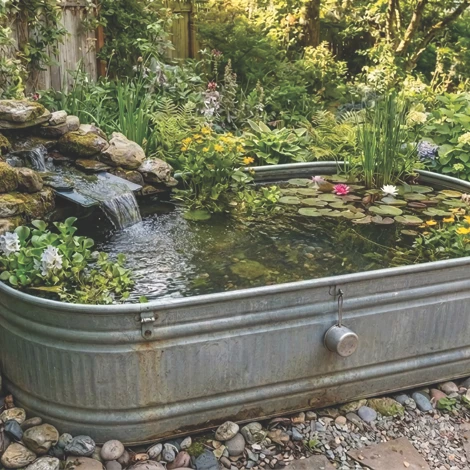
The stock tank pond has become one of the most popular DIY mini pond ideas around, and it honestly earns the hype! A galvanized trough gives a patio pond that clean, industrial-farmhouse look people love, and it gets you there without a shovel and a full weekend of digging.
It is still a pond though, holding live water and often plants and fish, so it needs the same fundamentals as any other water feature. This guide walks through how to pick the right tank, prep it safely, and set up circulation, planting, and fish care so your container pond thrives well past its first photo shoot.
Why a Stock Tank Makes Such a Good Mini Pond
Stock tanks were built to hold water for livestock, so they arrive watertight, sturdy, and weather resistant right out of the box. That makes them a genuine shortcut to a finished pond basin. Round and oval stock tanks are widely available from farm supply stores in sizes from around 50 gallons up to 300 gallons and beyond, which covers everything from a tabletop water garden to a small fish pond.
A stock tank pond also solves a practical problem. Renters, small-yard owners, and anyone who wants a water feature without permanent excavation can set a tank on a patio, deck, or side yard and have a working pond by the end of the day. Because the tank is portable, you can move it, drain it for winter, or relocate it entirely if your landscaping plans change.
Choosing and Prepping Your Tank
Size and shape depend on what you want to keep in the pond. A 100-gallon oval tank is plenty for a simple planted mini pond. A 150 to 300-gallon round or oval tank gives you enough volume to comfortably keep a handful of small fish alongside your plants. More water volume means more stable temperature and water chemistry, so when you are choosing between two sizes, the bigger tank is usually the safer bet.
The one safety issue every stock tank pond builder should know about is zinc. Galvanized steel gets its rust resistance from a zinc coating, and that coating can leach into the water, especially from a brand new tank. Zinc is toxic to fish even in small amounts, so plan around it before adding any livestock. You have two reliable options: let a new, empty tank weather outdoors for several months so the coating dulls and stabilizes, or skip the wait and line the interior with a flexible pond liner or Pond Armor Pond Shield Fish-Safe Paint Epoxy Liner. A liner also protects the metal, extending the tank's life and giving you a smooth surface for tucking in rocks and plant baskets.
Once your tank is ready, set it on a level, stable surface. A few inches out of level becomes obvious once it is full of water, and an unsupported edge can eventually stress the tank walls. Pick a spot with a mix of sun and shade if you can. Full sun grows the healthiest water lilies and the most blooms, but it also feeds algae faster in a small volume of water, so four to six hours of direct sun is a solid target for most setups.
Pumps, Aeration, and Plumbing for a Small Pond
Even a small pond needs circulation. Stagnant water grows algae, lets debris settle and rot, and stresses fish. The standard rule of thumb is to move the entire volume of your pond through a pump or filter at least once every two hours, and to double that if you are keeping fish. For a 100-gallon stock tank pond, that means a pump rated for at least 50 gallons per hour with plants only, or 100 GPH once fish are in the mix. Scale the number up proportionally for larger tanks. A small submersible all-in-one pond filter/pump usually covers everything a container pond needs, since it is compact, energy efficient, and easy to hide behind a plant or rock.
If you are adding a small fountain, spitter, or filter box, match your tubing to the pump's output so you do not choke the flow. Flexible kink-free or vinyl tubing paired with insert fittings and stainless hose clamps is the simplest setup for a stock tank pond, since it skips the gluing required for rigid PVC and holds up well to the occasional repositioning.
If fish are part of the plan, add a small air pump and diffuser for adequate pond aeration, especially in summer when warm water holds less dissolved oxygen. Aeration also keeps the surface moving, which makes the water far less inviting to mosquitoes looking for a place to lay eggs.
Choosing Plants for a Small Footprint
Choosing aquatic plants for small ponds comes down to scale. Look for compact varieties bred for container ponds. Skip the vigorous spreaders meant for big water gardens, since they will quickly outgrow a stock tank. Dwarf water lilies are the classic choice and will bloom happily in as little as two feet of water. Marginal plants like dwarf cattail, corkscrew rush, and creeping jenny add texture along the rim and can sit on stacked bricks or a plant shelf to control their planting depth. A few stems of hornwort or anacharis submerged near the bottom act as natural oxygenators and compete with algae for nutrients.
Floating plants such as water lettuce or water hyacinth add cover and shade fast. In warm climates they multiply quickly, so plan to thin them out regularly to keep the surface from disappearing entirely. Since a stock tank has straight, uniform walls instead of the built-in shelves of a molded pond form, stacked bricks, cinder blocks, or a purpose-built plant shelf let you set each pot at the right depth for its species.
Best Fish for Small Ponds
Fish are optional in a stock tank pond, and plenty of people build a beautiful patio pond with plants and moving water alone. If you do want fish, stock light and choose fish species suited to a small volume of water. Fancy goldfish varieties tend to hold up better than sleek, fast-growing comets in a compact tank, and mosquitofish are a popular, low-maintenance option for natural mosquito control. Koi are a poor match for a stock tank long term. They grow large, produce a lot of waste, and need far more water volume and filtration than even a 300-gallon tank can reasonably support. If koi are the end goal, our guide on how to build a koi pond for beginners is a better starting point.
Whatever you stock, dechlorinate your tap water before adding fish, introduce new fish gradually, and keep a close eye on stocking density. A light touch goes a long way in a small volume of water, since waste and ammonia build up much faster in 150 gallons than they do in a 1,500-gallon pond.
Seasonal Care
A stock tank sits above ground with metal walls, so it heats up and cools down faster than an in-ground pond does. In summer, that means watching water temperature closely and providing some shade if fish are on board. In winter, that same exposure means the water can freeze solid during a hard cold snap, which puts any fish left inside at serious risk.
Plan ahead for winter in cold climates. Insulating the tank walls with foam board and adding a pond de-icer keeps a small opening ice-free so gasses can exchange even after the surface freezes over. In harsh winter climates, many stock tank pond owners choose to bring fish indoors for the season rather than risk a hard freeze in such a small volume of water. Hardy plants can often stay in place if their roots sit below the freeze line, but tender floaters and tropical marginals should come inside too.
Keeping the Water Balanced
Maintenance on a small pond is quick, but it needs to be regular. Skim leaves and debrisbefore they sink and decompose. Dose beneficial bacteria to help break down waste and keep nutrients in check, and remember that most treatments are labeled per 1,000 gallons, so do the math carefully for a 100 or 150-gallon tank. A basic water test kit helps you track ammonia, nitrite, and pH so you can catch problems early, before they show up as stressed fish or a tank gone green.
A Trend Worth Building Right
The stock tank pond trend caught on because it looks great and gets people into pond keeping without a major commitment. Build it right from the start, with a safe tank, the correct pump and tubing, a few well-chosen plants, and a realistic winter plan, and it will do far more than look good in a photo.
If this project has you dreaming bigger, our essential DIY backyard pond kit supplies guide walks through everything a full-sized build requires. Contact our passionate pond-loving team for custom pond-building advice at 866-POND-HELP.
Get more DIY pond inspiration from these related articles:
- Raised Garden Ponds
- Patio Pond Ideas | Mini Ponds
- How Many Fish Can a Pond Hold?
- Do I Really Need a Pond Liner?
Last Updated: August 28, 2026