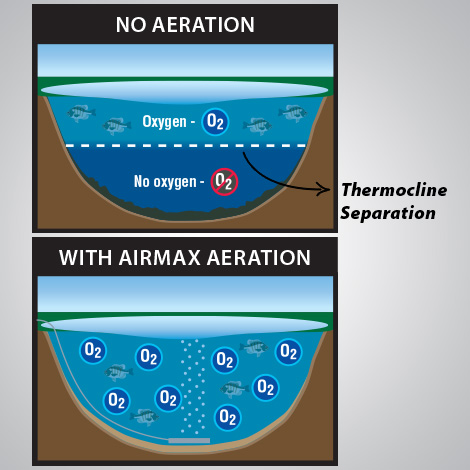
Thermal stratification is the separation of pond or lake water into layers of different temperatures during warm months. When surface water heats up in spring and summer, it becomes less dense than cooler, deeper water. Without mixing from wind or aeration, the pond forms three distinct layers in a process called lake thermal stratification. Stratification is common in ponds and lakes deeper than eight feet.
What is the Thermocline?
The thermocline is a transition zone between warm and cold water in a stratified pond or lake. It acts as a barrier that prevents oxygen from circulating downward and nutrients from moving upward.
Thermocline definition: a thin layer in a body of water where the temperature decreases rapidly with depth.
Think of the thermocline as a thermal curtain inside your pond. Fish may gather just above or below this layer because of temperature preferences, but oxygen depletion below the thermocline can cause a winter fish kill if left unchecked.
Why Does Pond Stratification Matter?
When a pond is thermally stratified, the bottom layer is cut off from oxygen replenishment. As organic debris decomposes, oxygen levels plummet, creating poor conditions for fish and beneficial bacteria.
Low oxygen can lead to fish kills if the pond suddenly turns over, particularly in winter when the anoxic bottom layer grows more substantial. Additionally, nutrient build-up leads to excess muck, poor water quality, foul odors, and harmful algal blooms.
Thermal Stratification Layers:
- Epilimnion: The warm (>39 degrees Fahrenheit) surface layer that interacts with wind and sunlight.
- Thermocline (metalimnion): The middle layer wherein temperature drops rapidly with depth, usually 3–10 feet below the surface in smaller lakes.
- Hypolimnion: The cold (32–39 degrees Fahrenheit), dense bottom layer that receives little to no gas exchange.
How to Prevent Thermal Stratification
Avoid issues caused by dangerous temperature layering and protect your fish year-round by installing a bottom-diffused aeration system to prevent stratification and ensure even oxygenation. Aeration mixes the water column, breaks down the thermocline, and supplies vital oxygen to every depth.
Protect Your Pond Fish All Year
Do you have questions about how to aerate your pond best to eliminate the thermocline and harmful stratification? Contact us at 866-POND-HELP to connect with a knowledgeable aeration expert ready to help.
Read more about the importance of aeration in these related articles:
How do I prevent a winter fish kill?
How to Tell if Your Pond is Properly Aerated
Key Takeaways:
Thermal stratification is a natural phenomenon in deep ponds and lakes, resulting in layers of water separated by temperature with a dividing thermocline. This process can harm fish and water quality without proper management. Installing a bottom-diffused aeration system keeps temperatures and oxygen levels uniform all season long.
What is thermal stratification?
Thermal stratification occurs when pond or lake water separates into layers of different temperatures. The top layer warms in summer, the middle thermocline layer cools rapidly with depth, and the bottom layer stays cold and oxygen-depleted.
What is the thermocline?
The thermocline is a transition layer in a stratified pond where the temperature drops sharply with depth, usually between 3 and 10 feet. It blocks oxygen circulation and nutrient mixing.
How do you prevent pond stratification?
Install a bottom-diffused aeration system to circulate water and eliminate the thermocline, ensuring oxygen reaches all depths and preventing fish kills.
Last Updated: October 14, 2025