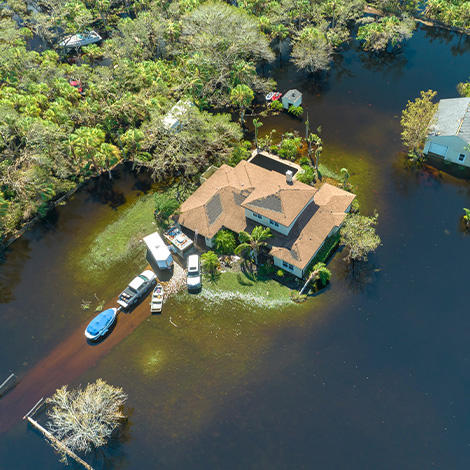
A hurricane can flood your property with more water in a day or two than your pond will typically contend with all year. Stormwater rages and destroys vital structures, and brings with it contamination like fertilizer, fuel, topsoil, livestock waste, road grit, and septic overflow. After the storm, all of this ends up in your pond.
The good news is that most storm damage is manageable, and a lot of it is preventable. Here is how to prepare your pond before the storm hits, what to do while it passes, and how to bring your water back into balance afterward.
Why Storms Hit Ponds So Hard
A pond is the low point of your landscape, so it collects everything the watershed sends downhill. This influx of polluted water leads to a low-oxygen, high-nutrient environment that spurs harmful algal blooms and kills fish.
Floodwater carries organic material that consumes dissolved oxygen as it breaks down. Heavy rain also stirs up bottom muck, releasing oxygen-demanding material and nutrients into the water column. Storm runoff also delivers a heavy load of nitrogen and phosphorus, which sets the stage for an algae bloom two to four weeks after the storm.
The Airmax ClearPAC Plus, combined with diffused aeration, is the secret to weathering any storm.
Before the Storm: Prepare Early
Do this work while the forecast still gives you a few days. Once winds pick up, your pond is no longer the priority.
Make Room for the Water
Clear the emergency spillway and the primary outlet of brush, cattails, sticks, and sediment so water can leave as intended. On a stormwater retention pond, inspect and clear the trash rack, riser, and outfall pipe. A clogged riser is the single most common reason a retention pond tops its embankment.
Secure Equipment and Power
Unplug and, if possible, remove pumps, fountains, and controllers if flooding is expected to reach them.
Move your aeration system compressor cabinet to high ground if it sits in a flood-prone spot, or at minimum confirm it is elevated, vented, and on a GFCI-protected circuit or alternative energy source. Check that dock-mounted or shoreline cabinets are anchored.
Clean Up the Watershed
Anything loose on your property will make its way into your pond. Clean up yard waste, remove unsecure equipment, and store all chemicals well above expected flood levels to prevent the contamination that kills fish.
After the Storm: Assess, Test, Then Treat
Work through the recovery in order. Restoring water quality before you address safety and structure is a recipe for repeating the whole job.
1. Safety First
Assume floodwater is contaminated with sewage, fuel, and agricultural chemicals. Wear boots and gloves, keep children and pets away until the water clears, and do not swim. Check for downed lines before you touch any electrical equipment, and have a flooded compressor, pump, or control panel inspected before you plug it back in. Watch for displaced and injured wildlife along the shoreline.
2. Clear Debris and Deal With the Muck
Rake, skim, and haul out branches, leaves, trash, and dead vegetation as soon as it is safe. Every scrap of organic material left in the pond becomes muck and fuel for algae. A season of consistent muck reduction with natural bacteria and enzyme treatments and regular use of the Jenlis Muck Razer will keep this layer in check at a fraction of the cost of dredging.
3. Get Air in the Water
Low dissolved oxygen is the number one cause of a post-storm fish kill, and it usually arrives a day or two after the weather clears, not during the storm. Turbid water blocks sunlight and shuts down photosynthesis while decomposition ramps up, so oxygen demand rises just as oxygen production falls.
Restart your aeration system as soon as you are able, and run it around the clock until the water clears. If your bottom diffused aerator has been off for several days during warm weather, bring it back gradually. Start with short run times, or run a surface aerator or fountain first, then extend the cycle over three or four days. Slamming a stratified pond into full circulation can push oxygen-poor bottom water to the surface and cause the exact fish kill you are trying to prevent.
4. Run a Full Round of Pond Water Testing
Do not guess at what the flood left behind. Pond water testing with your local Department of Natural Resources gives you a baseline and tells you what to treat. Check the following:
- Ammonia and nitrite, which often spike when a heavy organic load overwhelms the pond's natural biological capacity.
- pH and alkalinity, which can swing when runoff, concrete wash, or agricultural lime enters the water.
- Dissolved oxygen, ideally measured at dawn when it is at its daily low.
- Phosphate, since a single flood can deliver a season's worth of nutrients.
- Salinity, if you are in a coastal area where storm surge may have pushed brackish or salt water into a freshwater pond.
Test again a week later. Storm effects unfold over time, and the second reading tells you whether the pond is recovering or still sliding.
5. Proactive Recovery
Once oxygen levels are stable and the water is moving, rebuild the microbial workforce the flood diluted, buried, or washed away. Airmax ClearPAC Plus contains the beneficial pond bacteria you need to digest the leaf litter, sediment, and organic load the storm delivered.
MuckAway and PondClear convert excess nutrients through the nitrogen cycle and compete with algae for the nutrients that would otherwise fuel a bloom. The ClearPac comes with EcoBoost PRx, a phosphate binder that locks up the free reactive phosphorus that came in with the runoff. Bacteria work best in well-oxygenated water, so ensure you get aeration up and running as soon as possible.
A Note on Stormwater Retention Ponds
A stormwater retention pond is engineered to take exactly this kind of abuse, but only if it is maintained. After a major event, document the high-water mark, inspect the outlet structure and forebay for sediment accumulation, check riprap and inlet armoring for displacement, and confirm the emergency spillway is intact and vegetated.
Report embankment cracking, sinkholes, or seepage to your engineer, municipality, or HOA management immediately. Maintaining vegetated buffers and a healthy bacteria program between storms keeps sediment and nutrients from turning a functional retention basin into a shallow, weed-choked eyesore.
Building a Pond That Handles the Next Storm
Recovery is easier when resilience is built in. Between storm seasons:
- Maintain a vegetated buffer of at least 25 feet around the pond, and skip lawn fertilizer inside it.
- Keep the spillway and outlet structures clear and properly sized for your watershed.
- Run aeration year-round so the pond is never starting from an oxygen deficit.
- Stay on a routine beneficial bacteria and muck reduction program so there is less organic material to go anaerobic when conditions turn.
- Inspect the dam, banks, and spillway twice a year, and repair small problems before floodwater turns them into big ones.
Keep test kits and spare treatments on hand before hurricane season starts, not after.
Get Help Recovering Your Pond
A storm-damaged pond can look hopeless when it is brown, littered, and stressed. Aeration, testing, debris removal, and consistent bacteria treatments will bring it back, usually within a single season.
If you are not sure where to start, or your test results are not making sense, contact us at 866-POND-HELP for free, personalized advice from an experienced Pond Coach.
Related reading:
- How Surface Runoff Pollutes Your Aquatic Ecosystem
- What Is Muck?
- Understanding the Nitrogen Cycle
- How Does a Pond Vacuum Work?
Last Updated: September 14, 2026