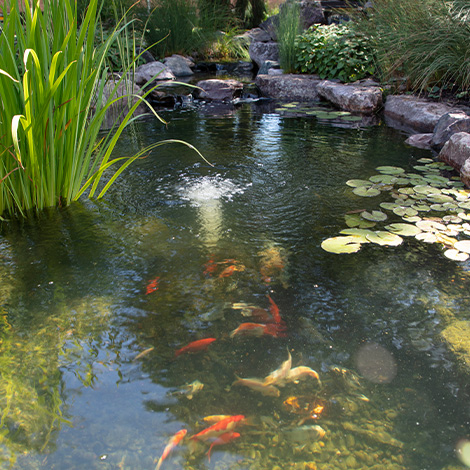
A hurricane or a slow-moving rain event can dump more water on your property in 24 hours than your koi normally see in a season. Water rises over your water garden's shoreline, the skimmer overflows, and everything the storm picks up along the way, like fertilizer, fuel, topsoil, grass clippings, mulch, and road grit, ends up in your pond.
By the time the sky clears, you may be looking at a muddy, low-oxygen pond full of debris and stressed (or missing) koi. Thankfully, most storm damage is preventable with a proactive ecosystem.
Why Floods Threaten Water Gardens
During a major flood event, four things tend to go wrong in your koi pond at once.
Oxygen crashes: Floodwater carries organic material and fine sediment that consumes dissolved oxygen as it breaks down. Heavy rain also stirs up bottom debris, releasing oxygen-demanding material and nutrients into the water column.
Quick Fix: Diffused aeration running continuously before, during, and after the storm.
Nutrients spike: Runoff delivers a heavy load of nitrogen and phosphorus, which sets the stage for an algae bloom or a green-water event two to four weeks after the storm.
Quick Fix: A consistent maintenance schedule with the DefensePAC pond care kit.
Fish get pushed around: Pond overflow lets koi swim out over the edge and get carried away by the torrent of floodwater--one of the most common and heartbreaking storm losses.
Quick Fix: Securely anchored pond netting.
Structures fail: A pond liner can shift or balloon when saturated soil pushes groundwater underneath it, and flooded pumps, UV clarifiers, and filters can be ruined outright.
Quick Fix: Remove vulnerable equipment before the storm and ensure your pond is properly lined with pond underlayment.
Understanding these four risks makes the prep list a lot easier to follow.
Before the Storm: Prepare Early
Do this work while the forecast still gives you a few days. Once winds pick up, your pond is no longer the priority.
Make Room for the Water
If your pond has a controllable outlet, drain valve, or you can pump down a few inches, consider lowering the water level several inches ahead of a forecasted heavy rain event. That extra space is the cheapest insurance you can buy against pond overflow and fish loss.
Clear your skimmer basket, filter pads, and any overflow outlet of leaves and debris so water can leave as intended rather than backing up over the edge.
A caution on lined ponds: do not fully drain a pond with a pond liner when the ground is already saturated or about to be. Pressure from groundwater can lift and float an empty liner right out of the ground. Leave water in it as ballast.
Secure Equipment and Power
Unplug and, if possible, remove pumps, UV clarifiers, filters, lights, and controllers if flooding is expected to reach them. External pumps and control boxes are especially vulnerable.
Move your aeration system compressor cabinet to high ground if it sits in a flood-prone spot, or at minimum confirm it is elevated, vented, and on a backup generator or GFCI-protected circuit. Coil and secure loose airline and tubing so it does not wash away.
If you have a generator, plan to power the aerator first. Oxygen circulation matters more than filtration after a flood.
Protect the Fish
If you cannot evacuate your fish indoors to safely weather the storm, the goal is to keep them in and keep debris out.
Stake down pond netting over the entire water garden. Netting keeps koi from swimming out during pond overflow, prevents leaves and blown-in debris from sinking and rotting, and discourages the herons and raccoons that show up looking for an easy meal once storm settles.
Stop feeding 24 to 48 hours before the storm, as uneaten food and extra waste consume oxygen at exactly the wrong time.
Move valuable koi to a stock tank or holding system only if you have properly aerated, temperature-matched water ready and a fish-safe indoor location. A poorly planned move may stress fish more than the storm, so be sure to add Stress Reducer Plus to help your fish adapt.
Clean Up the Yard
Anything loose within 50 feet of the water is going to make its way into your pond. Remove grass clippings, mulch piles, fertilizer bags, chemical containers, fuel cans, patio furniture, and other unsecured objects. Securely store harmful substances like fuel and biocides well above expected flood levels. This one hour of work prevents a lot of the contamination that causes a fish kill later.
After the Storm: Assess, Test, Then Treat
Work through the recovery in order. Restoring water quality before you address safety and structure is a recipe for disaster.
1. Safety First
Assume floodwater is contaminated with sewage, fuel, and chemicals. Wear boots and gloves, and keep children and pets away until the water clears. Check for downed lines before you touch any electrical equipment, and have a flooded pump or control panel inspected before you plug it back in. Watch for displaced wildlife around the pond's edge.
2. Inspect the Structure
Walk the entire perimeter and look for washed-out edging, undermined stone, and exposed liner. Check the liner for tears, wrinkles, exposed seams, or shifting. Repair small tears promptly with a patch kit made for your liner material.
Observe your water level to spot hidden damage. A healthy pond loses roughly a quarter inch to an inch per week to evaporation, depending on climate and season. If yours is dropping noticeably faster than that once the rain stops, you need to find and fix a leak. Add pond dye or milk near where you think the leak could be coming from, and follow the flow of water to spot the breach.
3. Clear Debris and Deal With the Muck
Rake, net, and haul out branches, leaves, trash, and dead vegetation as soon as it is safe. Every scrap of organic material left in the pond becomes muck--a long-term oxygen sink and nutrient bank.
Expect a thicker layer of sediment and organic sludge than you had before. Consistent muck reduction with natural bacteria and enzyme treatments will digest that layer far more gently than a full pond cleanout, but a deep cleaning with your pond vacuum is warranted to remove contaminants.
4. Get Air in the Water
Low dissolved oxygen is the number one cause of a post-storm fish kill, and it usually arrives a day or two after the weather clears, not during the storm. Turbid water blocks sunlight and shuts down photosynthesis while decomposition ramps up, so oxygen demand rises just as oxygen production falls.
Restart your aeration system as soon as you are able, and run it around the clock until the water clears and the fish stop crowding the surface. Waterfalls, fountains, and spitters all add oxygen too, so get them running as soon as the pump is safe to plug in.
If fish are gulping at the surface, that is an emergency. Add more aeration if you can, hold off on feeding, and skip any chemical treatments until oxygen recovers.
5. Run a Full Round of Pond Water Testing
Do not guess what the flood left behind. Pond water testing gives you a baseline and tells you what to treat. Check the following with an appropriate test kit:
- Ammonia and nitrite, which often spike when a biological filter has been flooded, buried in silt, or shut down.
- pH and alkalinity, which can swing when runoff, concrete wash, or mortar wash from damaged hardscape enters the water.
- Dissolved oxygen, ideally measured at dawn when it is at its daily low.
- Phosphate, since a single flood can deliver a season's worth of nutrients.
- Salinity, if you are in a coastal area where storm surge may have pushed brackish or salt water into your pond.
- Chlorine, if you topped the pond off from a garden hose during cleanup.
Test again a week later. Storm effects unfold over time, and the second reading tells you whether the pond is recovering or still sliding.
6. Rebuild the Biology
Once oxygen levels are stable and the water is moving, rebuild the microbial workforce the flood diluted, buried, or washed away. A regular program of beneficial pond bacteria digests the leaf litter, sediment, and organic load the storm delivered, converts ammonia through the nitrogen cycle, and competes with algae for the nutrients that would otherwise fuel a bloom. Pair bacteria with a phosphate binder to lock up the free reactive phosphorus that came in with the runoff.
Rinse filter pads and media in pond water rather than tap water so you do not destroy the colonies that survived. Consider a partial water change with a dechlorinator if test results warrant it. Bacteria work best in oxygen-rich water, which is one more reason to get the aerator and pump running first.
7. Ease Fish Back Into a Routine
Wait until the water clears and oxygen recovers before you resume feeding, then start with roughly a quarter of the normal amount and build back over a week. Watch for the classic post-flood stress signs: flashing, clamped fins, ulcers, fungus, or lethargy. Koi that survived a storm have compromised slime coats and depressed immune systems, so a water conditioner that rebuilds the slime coat is a reasonable precaution. If you lose fish, remove them promptly.
Building a Water Garden That Handles the Next Storm
Recovery is easier when resilience is built in. Between storm seasons:
- Build up the pond edge so surrounding grade slopes away from the water, and skip lawn fertilizer near the pond.
- Keep skimmers, overflows, and filters clear and properly sized for your pond volume.
- Run aeration year-round so the pond is never starting from an oxygen deficit.
- Stay on a routine beneficial bacteria and muck reduction program so there is less organic material to go anaerobic when conditions turn.
- Inspect the liner, edging, and plumbing twice a year, and repair small problems before floodwater turns them into big ones.
Keep pond netting, test kits, a liner patch kit, dechlorinator, and spare treatments on hand before hurricane season starts, not after.
Get Help Recovering Your Pond
A storm-damaged water garden can look hopeless when it is brown, littered, and stressed. Aeration, testing, debris removal, and consistent bacteria treatments will bring it back, usually within a single season.
If you are not sure where to start, or your test results are not making sense, contact us at 866-POND-HELP for free, personalized advice from an experienced Pond Coach.
Related reading:
- How Surface Runoff Pollutes Your Aquatic Ecosystem
- What Is Muck?
- Understanding the Nitrogen Cycle
- How Does a Pond Vacuum Work?
Last Updated: September 14, 2026